A 20-yard roll-off container represents the practical midpoint between compact 10-yard masonry boxes and massive 40-yard commercial haulers. Choosing this size makes sense when clearing out a three-bedroom estate or…
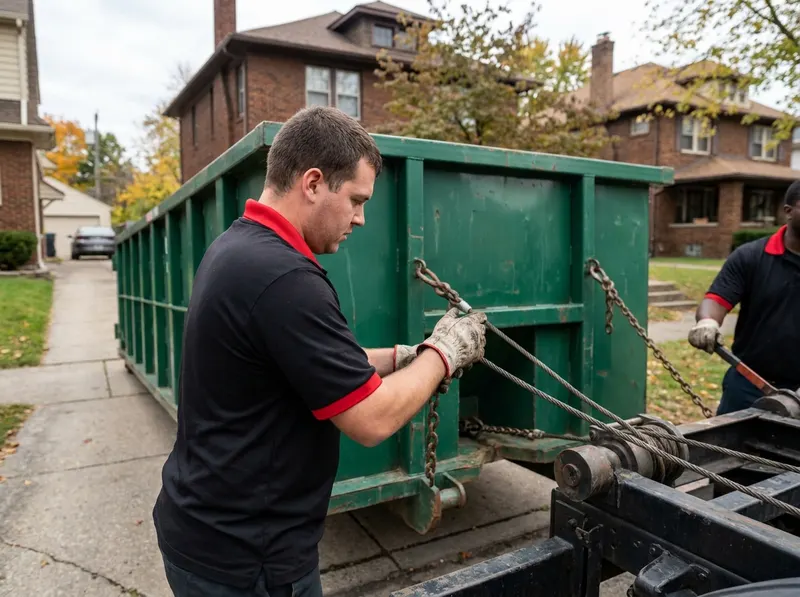
A 20-yard roll-off container represents the practical midpoint between compact 10-yard masonry boxes and massive 40-yard commercial haulers. Choosing this size makes sense when clearing out a three-bedroom estate or stripping a 2,500-square-foot shingle roof, where a smaller bin requires costly mid-project empty-and-return hauls. The trade-off is footprint: the container requires approximately 60 feet of straight-line clearance for the truck to drop its rails and slide the box down. For dense urban residential streets in Tremont, Ohio City, and Detroit-Shoreway, where narrow shared driveways and overhead utility lines limit access, street placement requires an obstruction permit issued by the Cleveland Department of Capital Projects. In outer suburban pockets like Kamm's Corners or Old Brooklyn, standard double-wide asphalt or concrete driveways accommodate the container without encroaching on municipal sidewalks.
Placement mechanics demand careful surface protection to eliminate structural stress on private property. Drivers place 2x10 wooden boards beneath the steel rear rollers before dropping the bin, which prevents scarring on cured concrete and prevents wheel ruts in warmer asphalt. Weight distribution determines legal compliance and road safety once hauling begins. Cuyahoga County transfer stations enforce strict rules on over-the-side loading: debris cannot crest above the 4.5-foot top rail. Wet plaster, tile backer board, and masonry accumulate weight rapidly; filling a 20-yard bin entirely with solid brick or wet dirt will surpass the legal gross vehicle weight limit of 66,000 pounds, requiring manual offloading prior to transport.
Booking operates on a clear schedule. Step one involves selecting placement coordinates and clearing at least 14 feet of overhead clearance beneath tree limbs and service drops. Step two consists of container transit, where the driver backs down the driveway, drops the protective ground pads, and positions the rear swing-door for walk-in access. Step three covers the loading phase: walk bulky sectionals and full sheets of plywood through the hinged door first to minimize air pockets, followed by loose items dropped over the mid-height sides. Step four triggers collection: a single call to (216) 628-8182 schedules removal within 24 hours, after which the load crosses the certified state scale at the disposal station to verify your tonnage.
Every job gets a firm, written price after a free on-site visit.
Tell us about your 20-yard roll-off container rental job in Cleveland and we'll send a clear, written quote, usually the same day.
 Superior Dumpster Rental