A 30-yard container delivers nine pickup-truck loads of volume, serving extensive cleanouts that overwhelm 10-yard and 20-yard options. When managing a complete multi-room gut in Ohio City or clearing out a two-family…
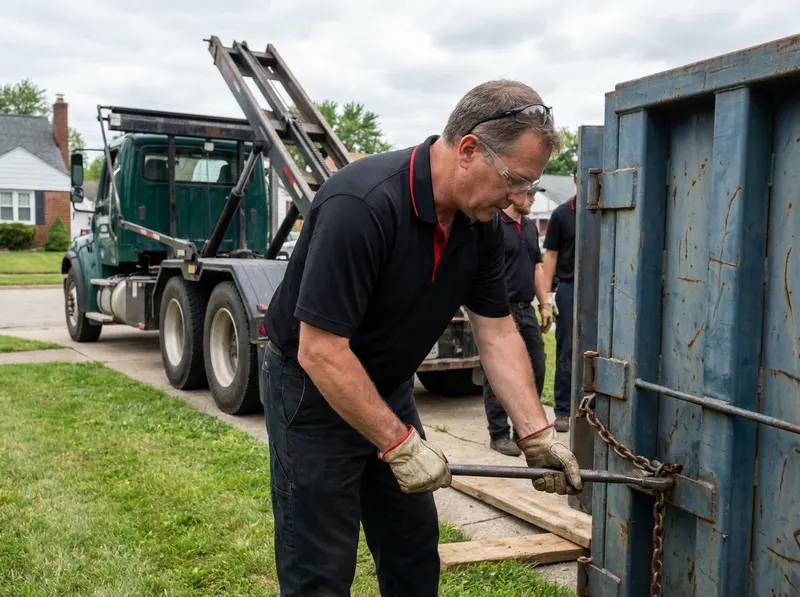
A 30-yard container delivers nine pickup-truck loads of volume, serving extensive cleanouts that overwhelm 10-yard and 20-yard options. When managing a complete multi-room gut in Ohio City or clearing out a two-family duplex in Slavic Village, this high-capacity bin prevents mid-project work stoppages caused by premature container swaps. The trade-off is footprint: the 22-foot body demands at least 60 feet of straight-line clearance for roll-off truck winch operations. While a 20-yard bin suits standard kitchen remodels, jumping to a 30-yard bin protects against unexpected interior debris bulk such as plaster lath, multiple subfloors, and whole-house carpet rolls. A common misunderstanding involves weight limits versus physical volume: filling a 30-yard container entirely with dense brick or wet soil will exceed legal road transport limits long before the sidewalls fill, incurring per-ton overage fees at the scale house.
Placement logistics require planning around local street architecture. Tight residential parcels along West 25th Street in Tremont or Clark-Fulton often have narrow driveway aprons that cannot accommodate a full 22-foot steel rail without blocking public sidewalk easements. In these settings, placement boards protect paved surfaces from steel roller gouges, distributing the downward load of the steel box. If street placement is necessary in the City of Cleveland, local municipal code requires obtaining a right-of-way street permit through the Division of Assessments and Licenses before the container drops on an asphalt roadway. Suburban lots in Kamm's Corners or Old Brooklyn offer longer private drives, yet overhead utility lines and mature tree limbs must maintain 14 feet of vertical clearance along the approach path.
Scheduling follows three sequential steps. First, the property owner calls (216) 628-8182 to verify that driveway surface slope and street access permit safe roll-off backing. Second, delivery drivers place wood block pads under the rear wheels to shield concrete or asphalt from point-load damage during container roll-off. Third, loading begins over the course of the project timeline. Customers walk bulky items through the heavy rear-hinged swing door rather than heaving heavy furniture over the 6-foot sidewalls, keeping material level with the top rim to ensure secure highway tarping prior to transport.
Every job gets a firm, written price after a free on-site visit.
Tell us about your 30-yard roll-off container rental job in Cleveland and we'll send a clear, written quote, usually the same day.
 Superior Dumpster Rental